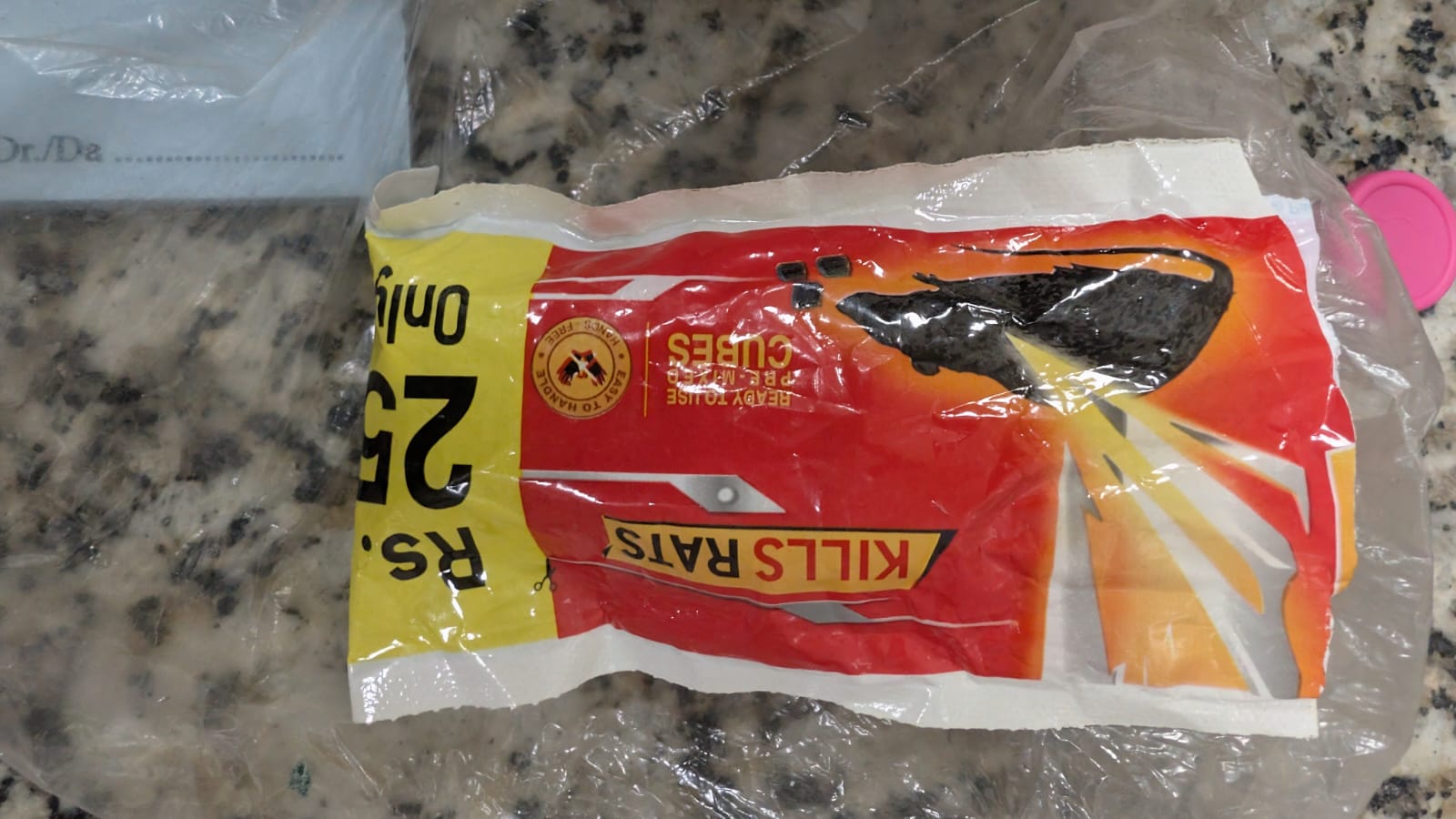
Bromadiolone poisoning is an important cause of potentially severe and prolonged bleeding because bromadiolone is a long-acting anticoagulant rodenticide (LAAR), commonly called a superwarfarin. It inhibits vitamin K recycling and consequently reduces the activity of vitamin K–dependent coagulation factors II, VII, IX and X.
Unlike ordinary warfarin exposure, bromadiolone poisoning may produce prolonged coagulopathy lasting weeks to months, and patients may require prolonged treatment with vitamin K1 (phytomenadione) and repeated INR monitoring.
Clinical pearl: A patient can appear clinically well initially and subsequently develop severe coagulopathy. A normal INR early after exposure does not necessarily exclude clinically important toxicity.
What is Bromadiolone?
Bromadiolone is a second-generation 4-hydroxycoumarin anticoagulant rodenticide. It belongs to the long-acting anticoagulant rodenticide group along with compounds such as brodifacoum and difenacoum.
It is considerably more persistent than conventional warfarin and can produce prolonged suppression of vitamin K–dependent coagulation.
Mechanism of bromadiolone poisoning
Bromadiolone inhibits vitamin K epoxide reductase, preventing regeneration of active vitamin K.
This results in impaired γ-carboxylation and activation of:
- Factor II
- Factor VII
- Factor IX
- Factor X
- Protein C
- Protein S
The result is progressive impairment of coagulation and an increased risk of spontaneous or trauma-related bleeding.
Clinical Features of Bromadiolone Poisoning
Patients may initially have no symptoms.
As coagulopathy develops, manifestations may include:
- Epistaxis
- Gingival bleeding
- Easy bruising
- Hematuria
- Hematemesis
- Melena
- Hematochezia
- Menorrhagia
- Intramuscular bleeding
- Hemarthrosis
- Retroperitoneal bleeding
- Intracranial hemorrhage
- Hemoperitoneum
- Severe anemia
- Hemorrhagic shock
Intracranial hemorrhage is an uncommon but potentially life-threatening complication.
Initial Assessment
Management begins with stabilization and assessment of bleeding risk.
ABCDE assessment
A — Airway
Assess airway protection, particularly in patients with:
- Altered consciousness
- Intracranial hemorrhage
- Massive upper gastrointestinal bleeding
B — Breathing
Assess:
- Respiratory rate
- Oxygen saturation
- Respiratory distress
C — Circulation
Assess:
- Heart rate
- Blood pressure
- Peripheral perfusion
- Capillary refill
- Evidence of active bleeding
- Shock
Establish IV access and obtain blood samples early.
D — Disability
Assess:
- Glasgow Coma Scale
- Pupils
- Focal neurological deficits
- Headache
- Seizures
Consider intracranial hemorrhage when neurological symptoms occur in a patient with severe coagulopathy.
E — Exposure
Look carefully for:
- Bruising
- Petechiae
- Hematomas
- Hematuria
- Gastrointestinal bleeding
- Injection or trauma sites
Investigations in Bromadiolone Poisoning
Important investigations include:
Essential tests
- PT/INR
- aPTT
- CBC with platelet count
- Hemoglobin/hematocrit
- Blood group and crossmatch
- Fibrinogen
- Renal function
- Liver function tests
- Serum electrolytes
Additional tests when indicated
- Factor II, VII, IX and X levels
- Mixing study
- Specific bromadiolone/superwarfarin assay
- CT brain for neurological symptoms
- Ultrasound/CT for suspected internal bleeding
Bromadiolone poisoning characteristically produces a vitamin K–dependent factor deficiency pattern, particularly involving factors II, VII, IX and X.
Bromadiolone Poisoning Treatment
The two major principles of treatment are:
- Replace vitamin K1 to overcome the anticoagulant effect
- Rapidly replace deficient coagulation factors when there is significant or life-threatening bleeding
1. Vitamin K1 — The Specific Antidote
Vitamin K1 (phytomenadione/phytonadione) is the cornerstone of treatment.
It restores the availability of reduced vitamin K and allows synthesis of functional vitamin K–dependent clotting factors.
Importantly, vitamin K does not immediately replace circulating clotting factors. Therefore, a patient with life-threatening hemorrhage may require coagulation-factor replacement in addition to vitamin K.
Route of vitamin K1
Depending on severity:
- Oral vitamin K1 — useful for stable patients and prolonged treatment
- IV vitamin K1 — preferred when rapid treatment is required or oral administration is not feasible
IV vitamin K should be administered cautiously because serious hypersensitivity/anaphylactoid reactions have been reported.
Vitamin K1 Dose in Bromadiolone Poisoning
There is no universally standardized dose or duration for bromadiolone poisoning.
The required dose depends on:
- INR
- Severity of coagulopathy
- Presence or absence of bleeding
- Amount/type of rodenticide exposure
- Response to treatment
- Recurrence of coagulopathy after dose reduction or interruption
Published cases have used a wide range of regimens, including repeated IV vitamin K followed by high-dose oral vitamin K.
For severe superwarfarin poisoning, high-dose vitamin K1 administered repeatedly throughout the day may be necessary, with dosing adjusted according to the INR and clinical response. Some toxicology literature reports doses as high as 50–100 mg/day or more in severe cases, but these doses should be individualized with toxicology/hematology guidance rather than applied as a routine dose.
Important
Do not use a single fixed vitamin K dose for every bromadiolone ingestion.
The appropriate regimen should be guided by:
Clinical bleeding + INR/PT response + toxicology consultation
2. Management of Active or Life-Threatening Bleeding
Vitamin K alone may be insufficient initially because the liver requires time to synthesize new coagulation factors.
For patients with major, life-threatening bleeding, rapid coagulation-factor replacement is required.
Options include:
4-factor PCC
4-factor prothrombin complex concentrate (PCC) provides factors:
- II
- VII
- IX
- X
and can rapidly correct severe vitamin K antagonist–associated coagulopathy.
Fresh Frozen Plasma
FFP can also replace deficient coagulation factors.
It may be used when PCC is unavailable or according to local protocol.
Packed RBCs
Packed red blood cells should be administered when significant blood loss has caused clinically important anemia or hemorrhagic shock.
The choice and dose of blood products should be individualized according to bleeding severity, hemoglobin, hemodynamic status and local transfusion protocols.
Key principle
Major bleeding = vitamin K1 + rapid coagulation-factor replacement + definitive control of the bleeding source.
3. Control the Source of Bleeding
Correction of coagulopathy is not enough if active bleeding continues.
Depending on the site, management may include:
- Endoscopic hemostasis
- Surgical intervention
- Interventional radiology
- Neurosurgical intervention
- Local pressure
- Gynecological intervention
- Management of gastrointestinal bleeding
A published case of severe bromadiolone-associated intracranial/other hemorrhage illustrates the need for both correction of coagulopathy and definitive treatment of the bleeding source.
4. Activated Charcoal and Gastric Decontamination
Routine gastrointestinal decontamination is not the main treatment for established bromadiolone poisoning.
Evidence summarized in toxicology reviews indicates that multiple-dose activated charcoal has not demonstrated reliable benefit for superwarfarin poisoning.
Any consideration of activated charcoal after a recent ingestion should therefore be individualized according to:
- Time since ingestion
- Amount ingested
- Airway protection
- Toxicology advice
- Product formulation
Do not delay resuscitation or treatment of hemorrhage for gastrointestinal decontamination.
5. INR Monitoring
INR is the most practical laboratory marker for monitoring the anticoagulant effect.
A patient with significant exposure should have serial:
- PT/INR
- aPTT
- CBC
- Hemoglobin
The frequency depends on the severity of poisoning and treatment response.
In severe poisoning, INR may need to be checked frequently during initial stabilization, followed by less frequent monitoring once a stable vitamin K regimen has been established.
Why Long-Term Treatment May Be Necessary
This is one of the most important differences between bromadiolone and ordinary warfarin poisoning.
Bromadiolone is highly lipophilic and has prolonged persistence in the body. Human pharmacokinetic data demonstrate a prolonged terminal elimination phase; one clinical study estimated a terminal half-life of approximately 24 days.
Therefore:
Stopping vitamin K too early → recurrent INR elevation → recurrent bleeding.
Cases have documented recurrence of severe coagulopathy after vitamin K was discontinued despite an initially normal INR.
When Can Vitamin K Be Stopped?
There is no universally accepted evidence-based stopping rule for bromadiolone poisoning.
A normal INR while the patient is receiving vitamin K does not necessarily mean that bromadiolone has been eliminated.
A commonly used approach is:
- Stabilize the INR with vitamin K.
- Continue vitamin K while the toxic effect persists.
- Gradually reduce/taper treatment when appropriate.
- Stop vitamin K under specialist supervision.
- Recheck PT/INR approximately 48–72 hours after stopping vitamin K.
- Restart treatment if significant coagulopathy recurs.
Where available, quantitative serum bromadiolone/superwarfarin testing can provide additional information, although there is no universally validated concentration threshold that independently determines when treatment can safely stop.
Bromadiolone Poisoning: Practical Treatment Algorithm
Suspected bromadiolone ingestion
↓
Assess ABCDE + bleeding
↓
Obtain PT/INR ± aPTT, CBC and other baseline investigations
↓
Is there major/life-threatening bleeding?
YES
→ Vitamin K1
→ 4-factor PCC or FFP for rapid factor replacement
→ RBC transfusion when indicated
→ Definitive control of bleeding
→ Serial INR monitoring
→ Toxicology/hematology consultation
NO
→ Assess exposure and coagulation profile
→ Serial PT/INR monitoring
→ Vitamin K1 when clinically indicated
→ Continue monitoring because delayed/prolonged coagulopathy can occur
↓
INR controlled?
YES
→ Continue appropriately dosed vitamin K1
→ Regular INR monitoring
→ Gradual reduction when appropriate
NO
→ Check adherence
→ Reassess ongoing exposure/re-exposure
→ Increase/adjust vitamin K under specialist guidance
→ Evaluate for ongoing bleeding
↓
Considering stopping vitamin K?
→ Stop only after adequate clinical assessment
→ Recheck INR after approximately 48–72 hours
→ Restart treatment if coagulopathy recurs
Bromadiolone Poisoning in Children
Children may accidentally ingest rodenticide bait.
A child who has ingested a small amount may remain asymptomatic, but the risk assessment depends on:
- Exact product
- Active ingredient
- Concentration
- Amount ingested
- Child’s weight
- Time since ingestion
- Repeated versus single exposure
Do not automatically assume that every rodenticide product contains bromadiolone. The product label should be checked whenever possible.
For children with suspected anticoagulant rodenticide exposure, consultation with a poison center or medical toxicologist is recommended.
Important Differential Diagnoses
A markedly prolonged PT/INR should not automatically be attributed to bromadiolone.
Consider:
- Warfarin exposure
- Other anticoagulant rodenticides
- Vitamin K deficiency
- Liver disease
- Disseminated intravascular coagulation
- Acquired factor inhibitors
- Congenital coagulation-factor deficiencies
- Malabsorption
- Drug interactions
Superwarfarin poisoning should particularly be considered in a patient with unexplained prolonged PT/INR and bleeding, especially when the history is unclear.
Key Differences: Warfarin vs Bromadiolone
| Feature | Warfarin | Bromadiolone |
|---|---|---|
| Use | Therapeutic anticoagulant | Rodenticide |
| Class | Vitamin K antagonist | Long-acting vitamin K antagonist |
| Common name | Warfarin | Superwarfarin |
| Duration of effect | Usually shorter | Prolonged |
| Coagulopathy | Usually manageable over days | May persist weeks–months |
| Antidote | Vitamin K1 | Vitamin K1 |
| Severe bleeding | Factor replacement may be required | Factor replacement may be required |
| Long-term vitamin K | Sometimes | Frequently required in severe poisoning |
| Monitoring | INR | Serial INR/PT |
Important Clinical Pearls
1. A normal early INR does not completely exclude toxicity.
The anticoagulant effect can be delayed because existing circulating clotting factors must first decline.
2. Vitamin K1 is the specific treatment.
Bromadiolone poisoning is fundamentally a vitamin K antagonist poisoning.
3. Vitamin K does not immediately correct major hemorrhage.
In life-threatening bleeding, rapidly replace coagulation factors with 4-factor PCC or FFP, according to availability and local protocol.
4. Treatment may last for months.
Severe bromadiolone poisoning can require prolonged vitamin K1 therapy because of its long persistence.
5. Do not stop vitamin K simply because the INR becomes normal.
The INR may normalize because of administered vitamin K while the rodenticide remains in the body.
6. Monitor after stopping therapy.
A recurrence of INR elevation after vitamin K withdrawal strongly suggests persistent anticoagulant activity.
7. Always identify the active ingredient.
“Rat poison” is not a diagnosis. Different rodenticides have different toxic mechanisms and treatments.
Summary
Bromadiolone poisoning is a potentially life-threatening superwarfarin poisoning characterized by prolonged vitamin K–dependent coagulopathy.
The cornerstone of treatment is:
Vitamin K1 + INR-guided monitoring + rapid factor replacement when significant bleeding is present.
Patients with severe poisoning may require high-dose and prolonged vitamin K1 therapy for weeks or months. Treatment should not be discontinued solely because the INR has normalized while the patient is receiving vitamin K. After vitamin K is eventually stopped, repeat coagulation testing after approximately 48–72 hours can help identify recurrent anticoagulation.
Because bromadiolone poisoning can be prolonged and potentially fatal, significant exposures, abnormal coagulation studies, or any active bleeding warrant urgent medical evaluation and specialist toxicology/hematology input.
Frequently Asked Questions
What is the antidote for bromadiolone poisoning?
Vitamin K1 (phytomenadione/phytonadione) is the specific antidote for bromadiolone-induced vitamin K antagonism.
How long does bromadiolone poisoning last?
Severe poisoning can persist for weeks to months, reflecting the prolonged persistence of bromadiolone and its anticoagulant effect.
Does bromadiolone poisoning cause bleeding?
Yes. Severe poisoning can cause epistaxis, gum bleeding, hematuria, gastrointestinal bleeding, internal hemorrhage and, rarely, intracranial hemorrhage.
Can bromadiolone poisoning be treated?
Yes. Early recognition, vitamin K1 therapy, appropriate coagulation-factor replacement and close monitoring can successfully reverse the coagulopathy.
Is vitamin K enough for severe bleeding?
Not necessarily. Vitamin K restores coagulation factor production but does not provide an immediate supply of functional factors. Patients with life-threatening bleeding may require 4-factor PCC or FFP in addition to vitamin K1.
Can bromadiolone poisoning recur after treatment?
Yes. Recurrent coagulopathy can occur after vitamin K is stopped because bromadiolone may remain active in the body for a prolonged period.
SEO Keywords
Primary keyword:
Bromadiolone poisoning treatment
Secondary keywords:
- Bromadiolone poisoning
- Bromadiolone treatment
- Bromadiolone antidote
- Vitamin K for bromadiolone poisoning
- Bromadiolone toxicity
- Bromadiolone overdose
- Bromadiolone rodenticide poisoning
- Superwarfarin poisoning treatment
- Anticoagulant rodenticide poisoning
- Vitamin K1 treatment
- Bromadiolone INR
- Bromadiolone coagulopathy
- Rat poison poisoning treatment
- Rodenticide poisoning treatment
- Bromadiolone bleeding
- Bromadiolone poisoning management