Which artery is the main supplier of blood to the brain? a) Carotid artery b) Femoral artery c) Radial artery d) Ulnar artery
The brachial plexus originates from which spinal nerves? a) C3-C7 b) C5-T1 c) L1-L5 d) T1-T5
Physiology
What is the normal resting cardiac output in an adult? a) 3 L/min b) 5 L/min c) 8 L/min d) 10 L/min
Which of the following hormones is secreted by the posterior pituitary? a) Prolactin b) Oxytocin c) Insulin d) Aldosterone
Pharmacology
Which of the following drugs is a beta-blocker? a) Losartan b) Metoprolol c) Amlodipine d) Digoxin
Warfarin acts by inhibiting which vitamin-dependent clotting factors? a) I, II, V, VIII b) II, VII, IX, X c) XI, XII, XIII d) III, IV, VII, X
Biochemistry
Which of the following is an essential amino acid? a) Glycine b) Lysine c) Proline d) Tyrosine
The end product of purine metabolism in humans is: a) Urea b) Uric acid c) Creatinine d) Ammonia
Pathology
Which type of necrosis is commonly seen in tuberculosis? a) Liquefactive b) Coagulative c) Caseous d) Fat
A patient with chronic myeloid leukemia (CML) most likely has which chromosomal abnormality? a) Philadelphia chromosome b) Trisomy 21 c) Turner syndrome d) Patau syndrome
Microbiology
Gram-negative bacteria possess which unique cell wall component? a) Peptidoglycan b) Lipopolysaccharide c) Teichoic acid d) Mycolic acid
Which organism causes gas gangrene? a) Clostridium difficile b) Clostridium perfringens c) Clostridium tetani d) Staphylococcus aureus
Forensic Medicine
Rigor mortis first starts in which muscle group? a) Face b) Chest c) Abdomen d) Legs
What is the legal age of consent for medical procedures in most countries? a) 14 years b) 16 years c) 18 years d) 21 years
Community Medicine
What is the incubation period of measles? a) 2-4 days b) 7-14 days c) 21-28 days d) 30-40 days
Herd immunity provides protection to which group? a) Vaccinated individuals b) Unvaccinated individuals c) All individuals d) Only immune-compromised individuals
Anatomy
Which artery is the main supplier of blood to the brain? a) Carotid artery b) Femoral artery c) Radial artery d) Ulnar artery
The brachial plexus originates from which spinal nerves? a) C3-C7 b) C5-T1 c) L1-L5 d) T1-T5
The sciatic nerve is a branch of which plexus? a) Cervical b) Brachial c) Lumbar d) Sacral
The sphenoid bone is located in which part of the body? a) Skull b) Pelvis c) Thorax d) Vertebral column
The functional unit of the kidney is called: a) Nephron b) Alveolus c) Hepatocyte d) Osteon
Physiology
What is the normal resting cardiac output in an adult? a) 3 L/min b) 5 L/min c) 8 L/min d) 10 L/min
Which hormone regulates water balance in the body? a) Insulin b) ADH c) Aldosterone d) Cortisol
The primary pacemaker of the heart is: a) AV node b) SA node c) Bundle of His d) Purkinje fibers
The Bohr effect describes the influence of: a) pH on oxygen binding to hemoglobin b) Carbon dioxide on hemoglobin structure c) Oxygen affinity of myoglobin d) Blood pressure regulation
Which part of the nephron is responsible for filtration? a) Proximal tubule b) Loop of Henle c) Glomerulus d) Collecting duct
Pharmacology
Which drug class is used as first-line treatment for hypertension? a) Beta-blockers b) ACE inhibitors c) Calcium channel blockers d) Diuretics
Which of the following drugs is a beta-blocker? a) Losartan b) Metoprolol c) Amlodipine d) Digoxin
Warfarin acts by inhibiting which vitamin-dependent clotting factors? a) I, II, V, VIII b) II, VII, IX, X c) XI, XII, XIII d) III, IV, VII, X
Which antibiotic inhibits bacterial cell wall synthesis? a) Tetracycline b) Penicillin c) Erythromycin d) Ciprofloxacin
Biochemistry
Which of the following is an essential amino acid? a) Glycine b) Lysine c) Proline d) Tyrosine
The end product of purine metabolism in humans is: a) Urea b) Uric acid c) Creatinine d) Ammonia
Which vitamin is required for collagen synthesis? a) Vitamin A b) Vitamin B12 c) Vitamin C d) Vitamin D
What is the primary storage form of glucose in the liver? a) Glycogen b) Starch c) Cellulose d) Glucose-6-phosphate
Pathology
Which type of necrosis is commonly seen in tuberculosis? a) Liquefactive b) Coagulative c) Caseous d) Fat
A patient with chronic myeloid leukemia (CML) most likely has which chromosomal abnormality? a) Philadelphia chromosome b) Trisomy 21 c) Turner syndrome d) Patau syndrome
Anatomy (5 Questions)
Which artery is the main supplier of blood to the brain? a) Carotid artery b) Femoral artery c) Radial artery d) Ulnar artery
The brachial plexus originates from which spinal nerves? a) C3-C7 b) C5-T1 c) L1-L5 d) T1-T5
The sciatic nerve is a branch of which plexus? a) Cervical b) Brachial c) Lumbar d) Sacral
The sphenoid bone is located in which part of the body? a) Skull b) Pelvis c) Thorax d) Vertebral column
The functional unit of the kidney is called: a) Nephron b) Alveolus c) Hepatocyte d) Osteon
Physiology
What is the normal resting cardiac output in an adult? a) 3 L/min b) 5 L/min c) 8 L/min d) 10 L/min
Which hormone regulates water balance in the body? a) Insulin b) ADH c) Aldosterone d) Cortisol
The primary pacemaker of the heart is: a) AV node b) SA node c) Bundle of His d) Purkinje fibers
The Bohr effect describes the influence of: a) pH on oxygen binding to hemoglobin b) Carbon dioxide on hemoglobin structure c) Oxygen affinity of myoglobin d) Blood pressure regulation
Which part of the nephron is responsible for filtration? a) Proximal tubule b) Loop of Henle c) Glomerulus d) Collecting duct
Pharmacology
Which drug class is used as first-line treatment for hypertension? a) Beta-blockers b) ACE inhibitors c) Calcium channel blockers d) Diuretics
Which of the following drugs is a beta-blocker? a) Losartan b) Metoprolol c) Amlodipine d) Digoxin
Warfarin acts by inhibiting which vitamin-dependent clotting factors? a) I, II, V, VIII b) II, VII, IX, X c) XI, XII, XIII d) III, IV, VII, X
Which antibiotic inhibits bacterial cell wall synthesis? a) Tetracycline b) Penicillin c) Erythromycin d) Ciprofloxacin
Biochemistry
Which of the following is an essential amino acid? a) Glycine b) Lysine c) Proline d) Tyrosine
The end product of purine metabolism in humans is: a) Urea b) Uric acid c) Creatinine d) Ammonia
Which vitamin is required for collagen synthesis? a) Vitamin A b) Vitamin B12 c) Vitamin C d) Vitamin D
What is the primary storage form of glucose in the liver? a) Glycogen b) Starch c) Cellulose d) Glucose-6-phosphate
Pathology
Which type of necrosis is commonly seen in tuberculosis? a) Liquefactive b) Coagulative c) Caseous d) Fat
A patient with chronic myeloid leukemia (CML) most likely has which chromosomal abnormality? a) Philadelphia chromosome b) Trisomy 21 c) Turner syndrome d) Patau syndrome
Pathology
Which type of necrosis is commonly seen in tuberculosis? a) Liquefactive b) Coagulative c) Caseous d) Fat
A patient with chronic myeloid leukemia (CML) most likely has which chromosomal abnormality? a) Philadelphia chromosome b) Trisomy 21 c) Turner syndrome d) Patau syndrome
Which of the following is a hallmark of irreversible cell injury? a) Cellular swelling b) Mitochondrial damage c) Ribosomal detachment d) Membrane blebbing
A 45-year-old smoker presents with a persistent cough and hemoptysis. A biopsy of the lung shows keratin pearls and intercellular bridges. What is the most likely diagnosis? a) Small cell carcinoma b) Adenocarcinoma c) Squamous cell carcinoma d) Large cell carcinoma
Which of the following tumors is associated with the RB gene mutation? a) Wilms tumor b) Retinoblastoma c) Neuroblastoma d) Osteosarcoma
Which inflammatory cells predominate in chronic inflammation? a) Neutrophils b) Macrophages c) Eosinophils d) Mast cells
Which of the following is a common finding in amyloidosis? a) Apple-green birefringence under polarized light b) Caseous necrosis c) Mallory bodies d) Reed-Sternberg cells
Microbiology
Which of the following bacteria is an obligate intracellular pathogen? a) Escherichia coli b) Mycobacterium tuberculosis c) Chlamydia trachomatis d) Staphylococcus aureus
Gram-positive cocci in clusters, catalase-positive, and coagulase-positive bacteria are characteristic of: a) Streptococcus pneumoniae b) Staphylococcus aureus c) Streptococcus pyogenes d) Enterococcus faecalis
Which of the following is the most common cause of viral gastroenteritis worldwide? a) Rotavirus b) Norovirus c) Adenovirus d) Astrovirus
A Ziehl-Neelsen stain is used to detect which microorganism? a) Mycobacterium tuberculosis b) Clostridium difficile c) Neisseria meningitidis d) Salmonella typhi
Forensic Medicine
Which of the following is an example of an antemortem sign of hanging? a) Fracture of the hyoid bone b) Dribbling of saliva c) Tardieu’s spots d) Postmortem lividity
Which of the following is a sign of drowning? a) Pugilistic attitude b) Cutis anserina (goosebumps) c) Cherry-red discoloration of the skin d) Rigor mortis
In forensic medicine, the term “Pugilistic attitude” is commonly seen in: a) Hanging b) Drowning c) Fire-related deaths d) Cyanide poisoning
The best method for determining the age of a person between 14 and 21 years is: a) X-ray of the skull b) X-ray of the wrist and elbow c) Dental examination d) Anthropometry
Which of the following poisons leads to bright red-colored postmortem blood? a) Arsenic b) Cyanide c) Carbon monoxide d) Lead
Which is the first organ to putrefy in a dead body? a) Brain b) Liver c) Heart d) Lungs
Community Medicine
Which of the following is the most commonly used measure of disease frequency in epidemiology? a) Incidence rate b) Case fatality rate c) Prevalence d) Relative risk
The best method for assessing the nutritional status of a community is: a) Body Mass Index (BMI) b) Mid-upper arm circumference (MUAC) c) Dietary recall d) Growth monitoring
The term “herd immunity” refers to: a) Immunity in animals b) Protection of unvaccinated individuals in a population c) Immunity achieved through natural infection d) Resistance to all infections
The SAFE strategy is used for the control of: a) Tuberculosis b) Malaria c) Trachoma d) Dengue fever
The primary goal of the Integrated Management of Childhood Illness (IMCI) program is to: a) Reduce hospital admissions b) Reduce under-five mortality c) Improve vaccination coverage d) Treat all children with antibiotics
Which of the following is an example of primary prevention? a) Pap smear screening for cervical cancer b) Immunization c) Rehabilitation of stroke patients d) Chemotherapy for cancer
The recommended salt intake to prevent hypertension, as per WHO guidelines, is: a) Less than 2 grams per day b) Less than 5 grams per day c) Less than 10 grams per day d) Less than 15 grams per day
The denominator in calculating the Infant Mortality Rate (IMR) is: a) Total number of births in a year b) Total number of live births in a year c) Total number of stillbirths in a year d) Total number of infants admitted to the hospital
Which of the following is an essential component of primary health care? a) Specialized tertiary care services b) Provision of MRI and CT scan facilities c) Equitable distribution of health services d) Advanced cardiac interventions
The color code for a “sharp waste container” in biomedical waste management is: a) Red b) Yellow c) Blue d) White
Medicine
A 65-year-old male with a history of hypertension and diabetes presents with sudden-onset unilateral weakness of the right arm and leg. The most likely cause is: a) Myasthenia gravis b) Stroke c) Guillain-Barré syndrome d) Multiple sclerosis
Which of the following is the most common cause of chronic kidney disease (CKD)? a) Diabetes mellitus b) Hypertension c) Polycystic kidney disease d) Glomerulonephritis
Which electrolyte abnormality is most commonly associated with Addison’s disease? a) Hypernatremia b) Hypokalemia c) Hyperkalemia d) Hypocalcemia
The most common cause of community-acquired pneumonia is: a) Staphylococcus aureus b) Streptococcus pneumoniae c) Klebsiella pneumoniae d) Mycobacterium tuberculosis
Which sign is most suggestive of pericardial tamponade? a) Beck’s triad b) Battle’s sign c) Trousseau’s sign d) Grey Turner’s sign
A 45-year-old woman presents with fatigue, pallor, and glossitis. Laboratory investigations show a low hemoglobin level and an increased mean corpuscular volume (MCV). The most likely diagnosis is: a) Iron deficiency anemia b) Vitamin B12 deficiency c) Thalassemia d) Anemia of chronic disease
Which of the following is the most common cause of hyperthyroidism? a) Hashimoto’s thyroiditis b) Toxic multinodular goiter c) Graves’ disease d) Iodine deficiency
A patient with a long history of alcohol abuse presents with confusion, ataxia, and ophthalmoplegia. Which vitamin deficiency is most likely responsible? a) Vitamin B1 (Thiamine) b) Vitamin B6 (Pyridoxine) c) Vitamin B12 (Cobalamin) d) Vitamin D
Which of the following is a key feature of nephrotic syndrome? a) Hematuria b) Hypertension c) Proteinuria >3.5 g/day d) Oliguria
A patient presents with polyuria, polydipsia, and a fasting blood glucose of 300 mg/dL. The most likely diagnosis is: a) Diabetes insipidus b) Type 1 diabetes mellitus c) Type 2 diabetes mellitus d) Cushing’s syndrome
Which of the following drugs is most commonly associated with causing drug-induced lupus? a) Methotrexate b) Hydralazine c) Ibuprofen d) Aspirin
Which heart sound is characteristically heard in mitral stenosis? a) Opening snap b) S3 gallop c) Ejection click d) Wide splitting of S2
Which of the following is the first-line treatment for status epilepticus? a) Phenytoin b) Diazepam c) Carbamazepine d) Valproic acid
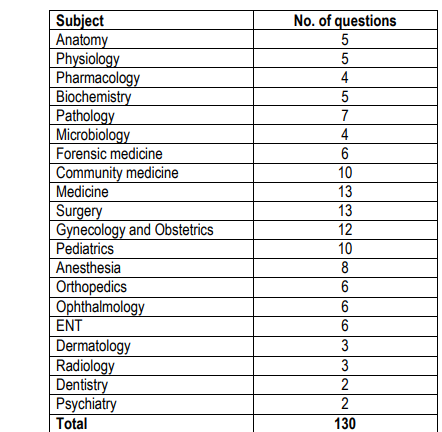
Below is a set of 130 multiple-choice questions (MCQs) organized by subject, following the distribution indicated in your table. These are designed for practice in the style of the NMCLE (Nepal Medical Council Licensing Examination). Each question has one best answer.
Anatomy (5 Questions)
The femoral nerve primarily innervates which of the following muscle groups? A. Medial thigh muscles B. Anterior thigh muscles C. Posterior thigh muscles D. Lateral thigh muscles E. Gluteal muscles
The epiploic foramen (of Winslow) connects which two spaces? A. Lesser sac and greater sac B. Greater sac and rectouterine pouch C. Omental bursa and subhepatic space D. Subphrenic space and lesser sac E. Paracolic gutter and lesser sac
Which of the following structures passes through the carpal tunnel? A. Flexor carpi ulnaris tendon B. Palmaris longus tendon C. Median nerve D. Ulnar nerve E. Radial artery
In males, the inguinal canal transmits the: A. Round ligament of the uterus B. Femoral artery C. Testicular artery and vein D. Inferior epigastric artery E. Pudendal nerve
The boundary between the body and root of the tongue is marked by the: A. Filiform papillae B. Fungiform papillae C. Circumvallate papillae D. Terminal sulcus E. Lingual frenulum
Physiology (5 Questions)
In a normal ECG, the P wave represents: A. Atrial depolarization B. Ventricular depolarization C. Atrial repolarization D. Ventricular repolarization E. SA node discharge
Under normal resting conditions, the primary regulator of respiration is: A. Arterial PO₂ B. Arterial PCO₂ C. Arterial pH due to metabolic acids D. Blood pressure E. Body temperature
Which hormone is primarily responsible for sodium reabsorption in the distal convoluted tubule? A. Aldosterone B. Antidiuretic hormone (ADH) C. Atrial natriuretic peptide (ANP) D. Parathyroid hormone (PTH) E. Cortisol
The absolute refractory period in a nerve action potential is due to: A. Closure of potassium channels B. Inactivation of sodium channels C. Activation of chloride channels D. Hyperpolarization of the membrane E. Increased sodium permeability
Which of the following statements about cardiac output is true? A. Cardiac output is independent of heart rate B. Cardiac output = Stroke Volume × Heart Rate C. Cardiac output is always constant D. Cardiac output decreases with exercise E. Cardiac output is highest when standing upright
Pharmacology (4 Questions)
Which of the following drugs is a non-selective beta-blocker? A. Metoprolol B. Atenolol C. Propranolol D. Bisoprolol E. Nebivolol
The antidote for opioid overdose is: A. Flumazenil B. Naloxone C. N-acetylcysteine D. Atropine E. Pralidoxime
Which antibiotic is classified as a glycopeptide? A. Vancomycin B. Gentamicin C. Ciprofloxacin D. Azithromycin E. Ceftriaxone
Which class of antibiotics is commonly associated with ototoxicity and nephrotoxicity? A. Penicillins B. Aminoglycosides C. Macrolides D. Tetracyclines E. Fluoroquinolones
Biochemistry (7 Questions)
The end product of purine metabolism in humans is: A. Urea B. Uric acid C. Ammonia D. Creatinine E. Xanthine
Which enzyme is deficient in Phenylketonuria (PKU)? A. Tyrosinase B. Phenylalanine hydroxylase C. Homogentisic acid oxidase D. Dihydropteridine reductase E. Tyrosine aminotransferase
In glycolysis, the enzyme that catalyzes the conversion of fructose-6-phosphate to fructose-1,6-bisphosphate is: A. Hexokinase B. Phosphofructokinase-1 (PFK-1) C. Aldolase D. Enolase E. Pyruvate kinase
Which lipoprotein is considered “good” cholesterol because it helps remove excess cholesterol from tissues? A. Chylomicrons B. VLDL C. LDL D. HDL E. IDL
The rate-limiting enzyme in cholesterol biosynthesis is: A. HMG-CoA reductase B. HMG-CoA lyase C. Acetyl-CoA carboxylase D. Mevalonate kinase E. Squalene synthase
Vitamin K is required for the gamma-carboxylation of which clotting factors? A. Factors I, II, V, X B. Factors II, VII, IX, X C. Factors VIII, IX, X, XI D. Factors IX, X, XI, XII E. Factors II, V, VII, IX
A deficiency of which vitamin leads to scurvy? A. Vitamin A B. Vitamin B₁ (Thiamine) C. Vitamin C (Ascorbic acid) D. Vitamin D E. Vitamin K
Pathology (7 Questions)
“Nutmeg liver” is typically associated with: A. Alcoholic cirrhosis B. Congestive heart failure C. Viral hepatitis D. Non-alcoholic steatohepatitis E. Hemochromatosis
Which of the following is a tumor suppressor gene? A. HER2 B. RAS C. p53 D. BCR-ABL E. RET
Reed-Sternberg cells are characteristic of: A. Hodgkin lymphoma B. Non-Hodgkin lymphoma C. Multiple myeloma D. Leukemoid reaction E. Infectious mononucleosis
Which hypersensitivity reaction is primarily mediated by IgE antibodies? A. Type I B. Type II C. Type III D. Type IV E. Type V
Which of the following best describes apoptosis? A. Pathologic cell death with inflammatory response B. Pathologic cell death without inflammatory response C. Programmed cell death without inflammatory response D. Uncontrolled cell proliferation E. Necrosis with neutrophilic infiltration
In granulomatous inflammation, which cell type is most characteristic? A. Neutrophils B. Eosinophils C. Lymphocytes D. Epithelioid histiocytes (macrophages) E. Plasma cells
Auer rods are commonly seen in: A. Chronic Myeloid Leukemia (CML) B. Acute Myeloid Leukemia (AML) C. Acute Lymphoblastic Leukemia (ALL) D. Chronic Lymphocytic Leukemia (CLL) E. Hodgkin lymphoma
Microbiology (4 Questions)
The most common cause of urinary tract infections is: A. Staphylococcus aureus B. Escherichia coli C. Pseudomonas aeruginosa D. Klebsiella pneumoniae E. Proteus mirabilis
A Gram-positive bacterium that forms spores and causes pseudomembranous colitis is: A. Clostridium botulinum B. Clostridium difficile C. Clostridium perfringens D. Clostridium tetani E. Bacillus cereus
The Mantoux test (PPD test) is used for the diagnosis of: A. Typhoid fever B. Tuberculosis C. Syphilis D. Diphtheria E. Gonorrhea
Negri bodies are associated with which viral infection? A. Rabies B. Poliovirus C. Influenza D. Herpes simplex E. HIV
Forensic Medicine (5 Questions)
The most common pattern of fingerprint is: A. Arch B. Whorl C. Loop D. Composite E. Accidental
“Hanging” typically refers to death caused by: A. Strangulation by ligature with the body lying flat B. Throttling by hand C. Constriction of the neck by a ligature with the body suspended D. Suffocation by pillow E. Drowning in water
The “Pugilistic attitude” in a burned body is due to: A. Postmortem artifact caused by heat-induced muscle contraction B. Rigor mortis C. Decomposition D. Defensive posture during burning E. Heat stroke
The greenish discoloration of a bruise is primarily due to: A. Bilirubin B. Biliverdin C. Hematin D. Hemosiderin E. Urobilin
“Marbling” in a decomposing body refers to: A. Marbled appearance on bones B. Discoloration of nails C. Greenish discoloration of the abdomen D. Vein pattern on the skin due to hemolysis E. Swelling of the face and neck
Community Medicine (10 Questions)
The best indicator of the overall health status of a community is often considered to be: A. Infant mortality rate B. Maternal mortality rate C. Crude death rate D. Life expectancy E. Per capita income
Which study design is best for investigating rare diseases? A. Case-control study B. Cohort study C. Cross-sectional study D. Randomized controlled trial E. Ecological study
The concept of “herd immunity” is most relevant to: A. Non-communicable diseases B. Vaccine-preventable communicable diseases C. Genetic disorders D. Occupational diseases E. Nutritional deficiencies
In epidemiology, “incidence” refers to: A. Total number of existing cases of a disease B. Number of new cases in a given time period C. Mortality rate from a disease D. Ratio of sick to well individuals E. Prevalence in a specific population
The most sensitive indicator of recent malaria transmission in a community is: A. Spleen rate B. Parasite rate C. Infant parasite rate D. Annual Parasite Incidence (API) E. Slide positivity rate
“DALY” stands for: A. Disease Adjusted Life Year B. Disability Affected Life Year C. Disability-Adjusted Life Year D. Disease-Associated Life Year E. Disturbed Activity Life Year
Which of the following is NOT part of the “three delays” model in maternal health? A. Delay in deciding to seek care B. Delay in reaching a health facility C. Delay in receiving adequate care at the facility D. Delay in obtaining family planning services E. All of the above are part of the model
The best method to assess the severity of acute malnutrition in a community is: A. Weight for height (wasting) B. Height for age (stunting) C. Weight for age (underweight) D. Mid-upper arm circumference (MUAC) E. Body mass index (BMI)
Primary prevention of disease includes: A. Early diagnosis and prompt treatment B. Limitation of disability C. Rehabilitation D. Health promotion and specific protection E. Hospice care
A measure of dispersion that is the square root of the variance is the: A. Mean B. Mode C. Median D. Standard deviation E. Range
Medicine (13 Questions)
The most common cause of community-acquired pneumonia is: A. Streptococcus pneumoniae B. Staphylococcus aureus C. Mycoplasma pneumoniae D. Legionella pneumophila E. Klebsiella pneumoniae
A 55-year-old chronic alcoholic presents with confusion, ataxia, and ophthalmoplegia. The most likely diagnosis is: A. Korsakoff psychosis B. Wernicke’s encephalopathy C. Hepatic encephalopathy D. Central pontine myelinolysis E. Subdural hematoma
The drug of choice for an acute migraine attack is: A. Propranolol B. Amitriptyline C. Sumatriptan D. Topiramate E. Verapamil
A key finding in diabetes insipidus is: A. Low serum sodium B. Low serum osmolality C. High urine osmolality D. High serum osmolality E. Hypoglycemia
In rheumatoid arthritis, the most specific antibody is: A. Rheumatoid factor B. Anti-cyclic citrullinated peptide (anti-CCP) C. Antinuclear antibody (ANA) D. Anti-double-stranded DNA E. Anti-smooth muscle antibody
The triad of hemolytic anemia, jaundice, and splenomegaly is commonly seen in: A. Hereditary spherocytosis B. Thalassemia C. G6PD deficiency D. Sickle cell anemia E. Autoimmune hemolysis
A patient with Addison’s disease is likely to have: A. Hypertension and hypokalemia B. Hypotension and hyperkalemia C. Hypernatremia and hypokalemia D. Low ACTH levels E. Hyperglycemia
The most common cause of upper gastrointestinal bleeding is: A. Peptic ulcer disease B. Esophageal varices C. Mallory-Weiss tear D. Gastric cancer E. Gastritis
A “butterfly rash” on the face is characteristic of: A. Rheumatoid arthritis B. Systemic lupus erythematosus C. Psoriasis D. Dermatomyositis E. Pemphigus vulgaris
A characteristic feature of Parkinson’s disease is: A. Hemiballismus B. Athetosis C. Intention tremor D. Resting tremor E. Chorea
The most common type of shock in sepsis is: A. Hypovolemic shock B. Cardiogenic shock C. Obstructive shock D. Distributive shock E. Neurogenic shock
In infective endocarditis, Janeway lesions are described as: A. Painful nodules on the fingertips B. Painless erythematous lesions on palms and soles C. Retinal hemorrhages with pale centers D. Tender nodules in the pulp of fingers E. Splinter hemorrhages under the nails
The classic triad of meningitis includes: A. Fever, rash, photophobia B. Headache, seizures, vomiting C. Fever, headache, nuchal rigidity D. Altered sensorium, fever, bradycardia E. Vomiting, diarrhea, shock
Surgery (13 Questions)
The most common cause of an acute abdomen requiring surgery is: A. Acute pancreatitis B. Perforated peptic ulcer C. Acute appendicitis D. Acute cholecystitis E. Intestinal obstruction
During thyroid surgery, the recurrent laryngeal nerve is at greatest risk when ligating the: A. Superior thyroid artery B. Inferior thyroid artery C. External carotid artery D. Middle thyroid vein E. Thyroidea ima artery
A patient presents with a painless breast lump. The most appropriate initial investigation is: A. Mammography B. Ultrasound of the breast C. Fine-needle aspiration cytology (FNAC) D. Core needle biopsy E. MRI of the breast
Which hernia has the highest risk of strangulation? A. Direct inguinal hernia B. Indirect inguinal hernia C. Femoral hernia D. Epigastric hernia E. Umbilical hernia
The preferred incision for an open (traditional) appendectomy is the: A. Midline laparotomy B. Lanz incision C. Paramedian incision D. Kocher’s incision E. Pfannenstiel incision
According to the Parkland formula for burn resuscitation, the fluid requirement in the first 24 hours is: A. 2 ml × body weight (kg) × %TBSA B. 4 ml × body weight (kg) × %TBSA C. 6 ml × body weight (kg) × %TBSA D. 8 ml × body weight (kg) × %TBSA E. 10 ml × body weight (kg) × %TBSA
Which of the following is NOT typically a feature of intestinal obstruction? A. Colicky abdominal pain B. Absolute constipation C. Vomiting D. Abdominal distension E. Hematemesis
The best diagnostic test for suspected choledocholithiasis (CBD stone) is: A. Ultrasound of the abdomen B. CT scan of the abdomen C. Endoscopic retrograde cholangiopancreatography (ERCP) D. MRCP (Magnetic Resonance Cholangiopancreatography) E. HIDA scan
In trauma care, the “FAST” scan stands for: A. Focused Assessment with Sonography for Trauma B. Focused Assessment with Scanning Technique C. Focused Analysis with Sonographic Test D. Fast Abdominal Sonography in Trauma E. Full Abdominal Sonography for Trauma
The most common benign tumor of the liver is: A. Hepatic adenoma B. Focal nodular hyperplasia C. Hemangioma D. Cholangioma E. Hepatocellular carcinoma
In the evaluation of varicose veins, the Trendelenburg test assesses: A. Competency of perforators B. Competency of the saphenofemoral junction C. Deep vein patency D. Direction of venous blood flow E. Lymphatic drainage
Courvoisier’s sign (palpable non-tender gallbladder) is classically associated with: A. Gallbladder carcinoma B. Pancreatic head carcinoma C. Choledocholithiasis D. Cholangiocarcinoma E. Acute cholecystitis
Perforation of a duodenal ulcer typically presents with: A. Left iliac fossa pain B. Right iliac fossa pain C. Sudden onset of severe epigastric pain D. Gradual onset of periumbilical pain E. Chronic back pain
Gynecology & Obstetrics (12 Questions)
Which hormone is detected by standard home pregnancy tests? A. Follicle Stimulating Hormone (FSH) B. Luteinizing Hormone (LH) C. Human Chorionic Gonadotropin (hCG) D. Estrogen E. Progesterone
The most common cause of postpartum hemorrhage is: A. Retained placental fragments B. Uterine atony C. Uterine inversion D. Genital tract lacerations E. Coagulopathy
A Pap smear is primarily used to detect: A. Endometrial cancer B. Ovarian cancer C. Cervical intraepithelial neoplasia (CIN) D. Vaginal infections E. Breast cancer
The normal duration of the puerperium is approximately: A. 1 week B. 2 weeks C. 4 weeks D. 6 weeks E. 8 weeks
The drug of choice for controlling eclamptic seizures is: A. Diazepam B. Phenytoin C. Magnesium sulfate D. Hydralazine E. Labetalol
Which pelvic shape is most commonly associated with obstructed labor? A. Gynecoid B. Android C. Anthropoid D. Platypelloid E. Mixed
Clomiphene citrate helps in fertility by: A. Suppressing FSH release B. Stimulating LH surge directly C. Blocking estrogen receptors in the hypothalamus D. Increasing prolactin secretion E. Acting as an estrogen agonist in the ovary
A 28-year-old pregnant woman at 12 weeks presents with severe vomiting, weight loss, and dehydration. The most likely diagnosis is: A. Hyperemesis gravidarum B. Acute gastritis C. Cholecystitis D. Pancreatitis E. Preeclampsia
Which of the following is a tocolytic agent? A. Oxytocin B. Ergometrine C. Terbutaline D. Misoprostol E. Dinoprostone
The most common site of ectopic pregnancy is the: A. Ampulla of the fallopian tube B. Isthmus of the fallopian tube C. Fimbrial end of the tube D. Ovary E. Cervix
A 25-year-old woman has a painless ulcer on the vulva. The most likely cause is: A. Herpes genitalis B. Chancroid C. Syphilis D. Lymphogranuloma venereum E. Granuloma inguinale
The Bishop score is used to assess: A. Risk of eclampsia B. Fetal lung maturity C. Cervical favorability for induction of labor D. Pelvic adequacy E. Fetal distress
Pediatrics (10 Questions)
The most common cause of pneumonia in neonates is: A. Streptococcus pneumoniae B. Staphylococcus aureus C. Group B Streptococci D. Klebsiella pneumoniae E. Chlamydia pneumoniae
A child with “whooping cough” is most likely infected with: A. Haemophilus influenzae B. Bordetella pertussis C. Mycobacterium tuberculosis D. Corynebacterium diphtheriae E. Streptococcus pyogenes
The first tooth to erupt in most children is the: A. Upper central incisor B. Lower central incisor C. Upper lateral incisor D. Lower lateral incisor E. First molar
Koplik spots are pathognomonic for: A. Measles B. Rubella C. Chickenpox D. Scarlet fever E. Mumps
In pediatric practice, the APGAR score is routinely assessed at: A. 1 and 5 minutes after birth B. 5 and 10 minutes after birth C. 10 and 15 minutes after birth D. 15 and 20 minutes after birth E. 1, 5, and 10 minutes after birth
The recommended dose of Vitamin A for a child with measles (6–11 months) is: A. 50,000 IU B. 100,000 IU C. 150,000 IU D. 200,000 IU E. 250,000 IU
A neonate with excessive drooling and choking on feeds may have: A. Congenital diaphragmatic hernia B. Tracheoesophageal fistula C. Pyloric stenosis D. Duodenal atresia E. Hirschsprung’s disease
The most common cause of acute gastroenteritis in children worldwide is: A. Rotavirus B. Norovirus C. Adenovirus D. Astrovirus E. Escherichia coli
A “boot-shaped” heart on chest X-ray is characteristic of: A. Atrial septal defect B. Ventricular septal defect C. Tetralogy of Fallot D. Patent ductus arteriosus E. Coarctation of the aorta
The most common cause of early-onset neonatal sepsis is: A. Escherichia coli B. Listeria monocytogenes C. Group B Streptococcus D. Staphylococcus aureus E. Klebsiella pneumoniae
Anesthesia (8 Questions)
Malignant hyperthermia is most commonly triggered by: A. Propofol B. Thiopental C. Halothane D. Ketamine E. Nitrous oxide
The definitive treatment for malignant hyperthermia is: A. Dantrolene sodium B. Succinylcholine C. Atropine D. Bromocriptine E. Naloxone
Which of the following is a depolarizing neuromuscular blocker? A. Vecuronium B. Rocuronium C. Atracurium D. Succinylcholine E. Pancuronium
Minimum Alveolar Concentration (MAC) of an inhalational anesthetic is defined as: A. The alveolar concentration preventing movement in 50% of patients B. The alveolar concentration causing apnea in 50% of patients C. The alveolar concentration producing sedation in 100% of patients D. The alveolar concentration ensuring analgesia in 50% of patients E. The alveolar concentration lethal to 50% of patients
The color code for a nitrous oxide cylinder is: A. Black body, white shoulder B. Blue body C. Grey body D. Green body E. Brown body
An absolute contraindication for spinal anesthesia is: A. Hypotension B. Severe hypovolemia C. Anxiety D. Local skin infection at the puncture site E. Mild coagulopathy
Which intravenous anesthetic agent has antiemetic properties? A. Ketamine B. Thiopental C. Propofol D. Etomidate E. Midazolam
The recommended patient position for spinal anesthesia is: A. Prone position B. Supine position C. Lateral decubitus position with knees flexed D. Lithotomy position E. Trendelenburg position
Orthopedics (6 Questions)
The most common site of fracture in osteoporosis is: A. Femoral shaft B. Surgical neck of humerus C. Distal radius (Colles’ fracture) D. Vertebral compression fractures E. Tibial shaft
A 65-year-old with knee pain, crepitus, and joint space narrowing on X-ray likely has: A. Rheumatoid arthritis B. Osteoarthritis C. Gout D. Septic arthritis E. Osteomyelitis
A child presents with a painless limp and limited abduction of the hip. The most likely diagnosis is: A. Slipped Capital Femoral Epiphysis (SCFE) B. Perthes disease C. Septic arthritis D. Transient synovitis E. Juvenile rheumatoid arthritis
“Tennis elbow” is also known as: A. Lateral epicondylitis B. Medial epicondylitis C. Olecranon bursitis D. Radial tunnel syndrome E. Ulnar collateral ligament injury
A fracture with multiple fragments is referred to as a: A. Greenstick fracture B. Comminuted fracture C. Spiral fracture D. Transverse fracture E. Compression fracture
The definitive investigation for a meniscal injury of the knee is: A. X-ray of the knee B. MRI of the knee C. Arthrography D. Ultrasound E. CT scan
Ophthalmology (5 Questions)
The most common cause of blindness worldwide is: A. Cataract B. Glaucoma C. Macular degeneration D. Diabetic retinopathy E. Trachoma
Absence of the red reflex on examination may indicate: A. Conjunctivitis B. Retinoblastoma C. Glaucoma D. Uveitis E. Myopia
In primary open-angle glaucoma, the intraocular pressure is typically: A. Low or normal B. Elevated C. Fluctuating between high and low D. Always extremely high E. Unaffected
A 70-year-old with progressive loss of central vision most likely has: A. Glaucoma B. Diabetic retinopathy C. Age-related macular degeneration D. Retinitis pigmentosa E. Retinal detachment
The classic triad of congenital glaucoma includes: A. Tearing, photophobia, blepharospasm B. Proptosis, chemosis, diplopia C. Redness, discharge, itching D. Eye pain, headache, vomiting E. Floaters, flashing lights, vision loss
ENT (6 Questions)
The most common cause of acute otitis media in children is: A. Streptococcus pneumoniae B. Staphylococcus aureus C. Pseudomonas aeruginosa D. Proteus mirabilis E. Escherichia coli
A 30-year-old with unilateral nasal obstruction and recurrent epistaxis likely has: A. Nasal polyp B. Deviated nasal septum C. Inverted papilloma D. Allergic rhinitis E. Rhinoscleroma
The Rinne test compares: A. Air conduction (AC) to bone conduction (BC) in the same ear B. Bone conduction in both ears C. Air conduction in both ears D. Air conduction to sensorineural conduction E. Bone conduction to sensorineural conduction
The voice quality in bilateral vocal cord paralysis is typically: A. Aphonic B. Normal C. Strained and weak D. Deep and resonant E. Loud and high-pitched
The organism most commonly responsible for malignant otitis externa is: A. Staphylococcus aureus B. Pseudomonas aeruginosa C. Streptococcus pyogenes D. Escherichia coli E. Proteus vulgaris
The investigation of choice for suspected cholesteatoma is: A. Pure tone audiometry B. CT scan of the temporal bone C. MRI of the brain D. Tympanometry E. Ultrasound of the mastoid
Dermatology (3 Questions)
A 10-year-old child with honey-colored crusted lesions around the mouth most likely has: A. Impetigo B. Erysipelas C. Psoriasis D. Tinea corporis E. Contact dermatitis
The Auspitz sign (pinpoint bleeding on scale removal) is associated with: A. Lichen planus B. Psoriasis C. Pemphigus vulgaris D. Eczema E. Scabies
The drug of choice for scabies is: A. Permethrin cream B. Benzoyl peroxide C. Acyclovir ointment D. Hydrocortisone cream E. Salicylic acid
Dentistry (2 Questions)
The most common cause of tooth loss in adults is: A. Dental caries B. Gingivitis C. Periodontitis D. Trauma E. Malocclusion
Dental fluorosis is caused by: A. Excess fluoride ingestion during tooth development B. Vitamin D deficiency C. Excess calcium intake D. Poor oral hygiene E. High sugar diet
Psychiatry (2 Questions)
A false, fixed belief not in keeping with the patient’s cultural background is known as a: A. Hallucination B. Delusion C. Illusion D. Overvalued idea E. Confabulation
Lithium therapy requires regular monitoring of: A. Blood glucose levels B. Thyroid function and serum lithium levels C. Liver function tests D. Platelet count E. Coagulation profile
Additional 3 Questions (to reach 130 total)
Because the table’s row-by-row sum reaches 127, here are 3 extra Medicine questions to make a complete set of 130:
The presence of Bence Jones protein in the urine is most commonly associated with: A. Hodgkin lymphoma B. Non-Hodgkin lymphoma C. Multiple myeloma D. Waldenström’s macroglobulinemia E. Amyloidosis
In acute rheumatic fever, the most commonly affected heart valve is the: A. Aortic valve B. Mitral valve C. Tricuspid valve D. Pulmonary valve E. All valves equally
A “water hammer” (collapsing) pulse is characteristic of: A. Aortic stenosis B. Aortic regurgitation C. Mitral stenosis D. Mitral regurgitation E. Tricuspid regurgitation
Usage Notes
These MCQs are for practice and review; they are not an official exam paper.
Each question is single-best-answer format.
For actual NMCLE preparation, consult official guidelines and past papers as well.