Daily Archives: February 14, 2025

Pre-Diploma in Medical Lab Technology (Lab Assistant) Model Test

Here are Pre-Diploma in Medical Lab Technology (Lab Assistant) Model Test for your reference.

Total Questions: 25
Time Limit: 1/2 hour
Type: Multiple Choice Questions (MCQs)

Section 1: Laboratory Safety & Ethics (10 Questions)

  1. Which of the following is the first step when handling a chemical spill in the lab?
    a) Neutralize the spill immediately
    b) Report to the supervisor and follow spill cleanup procedures
    c) Mop the area with water
    d) Evacuate the lab immediately
  2. What does PPE stand for in a laboratory setting?
    a) Professional Protective Equipment
    b) Personal Protective Equipment
    c) Public Protection Essentials
    d) Primary Pathogen Elimination
  3. Which biosafety level (BSL) is required for handling highly infectious pathogens like Mycobacterium tuberculosis?
    a) BSL-1
    b) BSL-2
    c) BSL-3
    d) BSL-4
  4. In case of a needle stick injury, the first action should be:
    a) Report to the lab supervisor
    b) Wash the affected area with soap and water
    c) Ignore if there is no visible injury
    d) Apply antiseptic and continue work
  5. The best way to dispose of used blood collection tubes is:
    a) In a regular trash bin
    b) In a biohazard sharps container
    c) By autoclaving and reusing
    d) By flushing down the sink

Section 2: Microbiology (10 Questions)

  1. Which staining technique is used to differentiate between Gram-positive and Gram-negative bacteria?
    a) Acid-fast staining
    b) Gram staining
    c) Endospore staining
    d) Wright’s stain
  2. What is the primary purpose of culture media in microbiology?
    a) To kill bacteria
    b) To identify bacteria using color reactions
    c) To provide nutrients for bacterial growth
    d) To sterilize laboratory equipment
  3. Which type of bacteria appears pink after Gram staining?
    a) Gram-positive bacteria
    b) Gram-negative bacteria
    c) Acid-fast bacteria
    d) Spore-forming bacteria
  4. The most common method for sterilizing microbiological media is:
    a) Filtration
    b) Boiling
    c) Autoclaving
    d) Dry heat sterilization
  5. What is the incubation temperature for most human pathogens in microbiology labs?
    a) 25°C
    b) 37°C
    c) 50°C
    d) 4°C

Section 3: Hematology (10 Questions)

  1. What is the normal range of hemoglobin (Hb) for an adult male?
    a) 8-10 g/dL
    b) 10-12 g/dL
    c) 13-17 g/dL
    d) 18-22 g/dL
  2. Which anticoagulant is commonly used for complete blood count (CBC) tests?
    a) Sodium citrate
    b) Heparin
    c) EDTA
    d) Lithium heparin
  3. What is the main function of red blood cells?
    a) Clot formation
    b) Oxygen transport
    c) Immune response
    d) Enzyme production
  4. A decrease in white blood cell count is known as:
    a) Leukocytosis
    b) Leukopenia
    c) Thrombocytosis
    d) Erythrocytosis
  5. Platelets are primarily responsible for:
    a) Oxygen transport
    b) Immunity
    c) Blood clotting
    d) Hormone secretion

Section 4: Clinical Chemistry (10 Questions)

  1. The normal fasting blood glucose range for a healthy adult is:
    a) 40-70 mg/dL
    b) 70-99 mg/dL
    c) 100-140 mg/dL
    d) Above 140 mg/dL
  2. The enzyme ALT (Alanine Aminotransferase) is mainly associated with which organ?
    a) Heart
    b) Liver
    c) Kidney
    d) Brain
  3. What is the function of cholesterol in the human body?
    a) Energy production
    b) Hormone synthesis and cell membrane structure
    c) Protein metabolism
    d) Oxygen transport
  4. Urea is a waste product mainly excreted by the:
    a) Liver
    b) Kidney
    c) Lungs
    d) Pancreas
  5. What does an increased creatinine level indicate?
    a) Liver failure
    b) Kidney dysfunction
    c) Diabetes
    d) Anemia

Section 5: Basic Lab Procedures & Instrumentation (10 Questions)

  1. What is the most common method for measuring hemoglobin levels in a lab?
    a) Centrifugation
    b) Spectrophotometry
    c) Urinalysis
    d) Microscopy
  2. Which type of microscope is most commonly used in a medical lab?
    a) Electron microscope
    b) Compound light microscope
    c) Fluorescence microscope
    d) Phase-contrast microscope
  3. What is the purpose of centrifugation in a lab?
    a) To mix solutions
    b) To separate components of a sample based on density
    c) To kill bacteria
    d) To heat samples
  4. Which of the following is the first step in performing a urine dipstick test?
    a) Centrifuging the urine sample
    b) Shaking the urine sample
    c) Dipping the test strip and comparing colors to a chart
    d) Mixing the sample with a chemical reagent
  5. A spectrophotometer is used to measure:
    a) The number of bacteria in a sample
    b) The intensity of light absorbed by a sample
    c) The electrical conductivity of blood
    d) The size of cells under a microscope

lab technology

CTEVT Certificate in Medical Laboratory Technology (CMLT) – Model MCQ Question Set

Time: 45 Minutes
Full Marks: 30
(Each question carries 1 mark. Choose the correct answer.)


General Laboratory Practices and Safety

  1. Which biosafety level (BSL) is required for handling highly infectious pathogens like Mycobacterium tuberculosis?
    a) BSL-1
    b) BSL-2
    c) BSL-3
    d) BSL-4
  2. The process of complete destruction of all forms of microbial life, including spores, is called:
    a) Disinfection
    b) Sterilization
    c) Pasteurization
    d) Antisepsis
  3. Which personal protective equipment (PPE) is essential for working in a microbiology lab?
    a) Lab coat
    b) Gloves
    c) Face mask
    d) All of the above
  4. What is the correct order of blood collection tubes when using a multi-sample needle?
    a) EDTA, heparin, citrate, serum
    b) Serum, citrate, heparin, EDTA
    c) Citrate, serum, heparin, EDTA
    d) Any order is acceptable
  5. Which chemical is commonly used as a fixative in histopathology?
    a) Formalin
    b) Xylene
    c) Acetone
    d) Ethanol

Hematology

  1. Which anticoagulant is used for complete blood count (CBC) testing?
    a) Sodium fluoride
    b) EDTA
    c) Sodium citrate
    d) Heparin
  2. The normal hemoglobin level in adult males is approximately:
    a) 8-10 g/dL
    b) 12-16 g/dL
    c) 13-17 g/dL
    d) 18-22 g/dL
  3. What is the most common white blood cell (WBC) type in a healthy adult?
    a) Eosinophil
    b) Basophil
    c) Lymphocyte
    d) Neutrophil
  4. Which clotting factor is absent in hemophilia A?
    a) Factor VIII
    b) Factor IX
    c) Factor X
    d) Factor XII
  5. Which type of anemia is caused by vitamin B12 deficiency?
    a) Iron deficiency anemia
    b) Megaloblastic anemia
    c) Aplastic anemia
    d) Hemolytic anemia

Clinical Biochemistry

  1. The normal fasting blood glucose level in a healthy adult is:
    a) 50-80 mg/dL
    b) 70-100 mg/dL
    c) 110-150 mg/dL
    d) 150-200 mg/dL
  2. Which enzyme is elevated in myocardial infarction?
    a) Amylase
    b) Creatine kinase-MB (CK-MB)
    c) Alkaline phosphatase
    d) Lipase
  3. The main function of albumin in blood is to:
    a) Act as an enzyme
    b) Maintain osmotic pressure
    c) Transport oxygen
    d) Help in clotting
  4. A high level of uric acid in the blood is associated with:
    a) Diabetes mellitus
    b) Gout
    c) Hypertension
    d) Hepatitis
  5. The pH of normal human blood is:
    a) 6.8
    b) 7.35-7.45
    c) 7.8
    d) 8.0

Microbiology and Parasitology

  1. The Gram stain differentiates bacteria based on differences in:
    a) DNA content
    b) Cell wall structure
    c) Ribosome size
    d) Capsule thickness
  2. Which of the following bacteria is acid-fast?
    a) Streptococcus pneumoniae
    b) Escherichia coli
    c) Mycobacterium tuberculosis
    d) Staphylococcus aureus
  3. Which test is used to identify Staphylococcus aureus?
    a) Coagulase test
    b) Indole test
    c) Catalase test
    d) Oxidase test
  4. The causative agent of malaria is:
    a) Trypanosoma
    b) Plasmodium
    c) Leishmania
    d) Entamoeba
  5. The vector for dengue fever is:
    a) Anopheles mosquito
    b) Aedes mosquito
    c) Culex mosquito
    d) Sandfly

Immunology and Serology

  1. The Widal test is used to diagnose:
    a) Tuberculosis
    b) Typhoid fever
    c) Syphilis
    d) Malaria
  2. Which immunoglobulin is the first to appear in an acute infection?
    a) IgA
    b) IgM
    c) IgG
    d) IgE
  3. The ELISA test is commonly used for detecting:
    a) Blood group
    b) HIV infection
    c) Malaria
    d) Typhoid
  4. The Mantoux test is used for diagnosing:
    a) Hepatitis B
    b) Tuberculosis
    c) HIV/AIDS
    d) Syphilis
  5. The Rh factor is determined by the presence of:
    a) A antigen
    b) B antigen
    c) D antigen
    d) O antigen

Urinalysis and Clinical Pathology

  1. The presence of ketones in urine may indicate:
    a) Hypertension
    b) Diabetes mellitus
    c) Urinary tract infection
    d) Hepatitis
  2. Which crystal is commonly found in acidic urine?
    a) Triple phosphate
    b) Ammonium urate
    c) Uric acid
    d) Calcium carbonate
  3. The confirmatory test for protein in urine is:
    a) Benedict’s test
    b) Sulfosalicylic acid (SSA) test
    c) Biuret test
    d) Coagulation test
  4. Which parameter is not normally found in urine?
    a) Glucose
    b) Urobilinogen
    c) Urea
    d) Creatinine
  5. The color of normal urine is due to the presence of:
    a) Hemoglobin
    b) Bilirubin
    c) Urochrome
    d) Myoglobin
MCQ Answer Key

CTEVT CMLT MCQ Answer Key

Answer Key

1. c) BSL-3

2. b) Sterilization

3. d) All of the above

4. c) Citrate, serum, heparin, EDTA

5. a) Formalin

6. b) EDTA

7. c) 13-17 g/dL

8. d) Neutrophil

9. a) Factor VIII

10. b) Megaloblastic anemia

11. b) 70-100 mg/dL

12. b) CK-MB

13. b) Maintain osmotic pressure

14. b) Gout

15. b) 7.35-7.45

16. b) Cell wall structure

17. c) Mycobacterium tuberculosis

18. a) Coagulase test

19. b) Plasmodium

20. b) Aedes mosquito

21. b) Typhoid fever

22. b) IgM

23. b) HIV infection

24. b) Tuberculosis

25. c) D antigen

26. b) Diabetes mellitus

27. c) Uric acid

28. b) Sulfosalicylic acid (SSA) test

29. a) Glucose

30. c) Urochrome

DMLT License Exam For NHPC and India- MCQ Set 3

Here’s another set of 35 Multiple Choice Questions (MCQs) for the Diploma in Medical Laboratory Technology (DMLT) License Exam with answer keys at the end. After practicing these questionsyou can ace exams in Nepal and India.

1. Hematology & Blood Banking

  1. The lifespan of red blood cells (RBCs) is approximately:
    a) 60 days
    b) 90 days
    c) 120 days
    d) 150 days
  2. Which anticoagulant is used for coagulation studies?
    a) EDTA
    b) Sodium citrate
    c) Heparin
    d) Oxalate
  3. The universal donor blood group is:
    a) A
    b) B
    c) AB
    d) O
  4. Howell-Jolly bodies in RBCs are associated with:
    a) Sickle cell disease
    b) Iron deficiency anemia
    c) Post-splenectomy
    d) Hemophilia
  5. The normal hemoglobin level in adult males is:
    a) 8 – 10 g/dL
    b) 10 – 12 g/dL
    c) 13 – 17 g/dL
    d) 18 – 20 g/dL
  6. Which blood component is primarily responsible for clot formation?
    a) RBCs
    b) WBCs
    c) Platelets
    d) Plasma
  7. A decrease in WBC count is known as:
    a) Leukocytosis
    b) Leukopenia
    c) Erythrocytosis
    d) Thrombocytosis
  8. A left shift in the WBC count refers to an increase in:
    a) Mature neutrophils
    b) Immature neutrophils
    c) Lymphocytes
    d) Monocytes
  9. Blood collected for prothrombin time (PT) testing should be stored at:
    a) Room temperature
    b) 2-8°C
    c) -20°C
    d) 37°C
  10. The preferred site for bone marrow aspiration in adults is:
    a) Tibia
    b) Sternum
    c) Femur
    d) Iliac crest

2. Clinical Biochemistry

  1. Which organ is primarily responsible for detoxification of drugs?
    a) Kidney
    b) Liver
    c) Spleen
    d) Pancreas
  2. A high level of serum bilirubin causes:
    a) Anemia
    b) Jaundice
    c) Cyanosis
    d) Edema
  3. The normal fasting blood glucose level in mg/dL is:
    a) 50 – 70
    b) 70 – 100
    c) 100 – 150
    d) 150 – 200
  4. Which test is commonly used to assess kidney function?
    a) Troponin test
    b) Creatinine test
    c) AST test
    d) Bilirubin test
  5. The normal range of serum sodium in mmol/L is:
    a) 90 – 110
    b) 135 – 145
    c) 150 – 165
    d) 170 – 190
  6. The term “lipemia” in a blood sample refers to:
    a) High protein levels
    b) High fat content
    c) High glucose levels
    d) High hemoglobin
  7. A positive Benedict’s test indicates the presence of:
    a) Protein
    b) Glucose
    c) Bilirubin
    d) Ketones
  8. Which enzyme is commonly elevated in myocardial infarction?
    a) ALT
    b) CK-MB
    c) Amylase
    d) Lipase
  9. Hyperglycemia is a characteristic feature of:
    a) Liver disease
    b) Diabetes mellitus
    c) Addison’s disease
    d) Hyperthyroidism
  10. The most commonly used anticoagulant in biochemistry tests is:
    a) EDTA
    b) Heparin
    c) Sodium citrate
    d) Oxalate

3. Microbiology & Parasitology

  1. Gram-negative bacteria appear ____ under Gram staining.
    a) Purple
    b) Red/Pink
    c) Blue
    d) Green
  2. The causative agent of tuberculosis is:
    a) Mycobacterium leprae
    b) Mycobacterium tuberculosis
    c) Escherichia coli
    d) Bacillus anthracis
  3. Which test is used to detect typhoid fever?
    a) Mantoux test
    b) Widal test
    c) VDRL test
    d) ELISA test
  4. Malaria is transmitted by:
    a) Houseflies
    b) Anopheles mosquitoes
    c) Ticks
    d) Lice
  5. Which medium is used for the culture of Mycobacterium tuberculosis?
    a) Blood agar
    b) MacConkey agar
    c) Lowenstein-Jensen medium
    d) Chocolate agar
  6. The causative organism of syphilis is:
    a) Neisseria gonorrhoeae
    b) Treponema pallidum
    c) Chlamydia trachomatis
    d) Haemophilus ducreyi
  7. Which disease is caused by a protozoan?
    a) Tuberculosis
    b) Malaria
    c) Cholera
    d) Tetanus
  8. The most common fungal infection in immunocompromised patients is:
    a) Cryptococcus
    b) Candida
    c) Aspergillus
    d) Histoplasma
  9. The causative agent of tetanus is:
    a) Clostridium perfringens
    b) Clostridium tetani
    c) Bacillus anthracis
    d) Streptococcus pyogenes
  10. E. coli is commonly found in:
    a) Skin
    b) Intestine
    c) Lungs
    d) Blood

4. Histopathology & Cytology

  1. The commonly used fixative for biopsy specimens is:
    a) Bouin’s fluid
    b) 10% formalin
    c) Acetone
    d) Glutaraldehyde
  2. The term “necrosis” refers to:
    a) Controlled cell death
    b) Uncontrolled cell death
    c) Cell proliferation
    d) Cell differentiation
  3. The best stain for detecting fungi in histology is:
    a) Giemsa stain
    b) PAS stain
    c) Hematoxylin and eosin
    d) Gram stain
  4. A papanicolaou (Pap) smear is used to detect:
    a) Tuberculosis
    b) Cervical cancer
    c) Malaria
    d) Syphilis
  5. Which type of biopsy removes an entire lesion?
    a) Incisional biopsy
    b) Excisional biopsy
    c) Needle biopsy
    d) Punch biopsy

Answer Key

1-c, 2-b, 3-d, 4-c, 5-c, 6-c, 7-b, 8-b, 9-b, 10-d
11-b, 12-b, 13-b, 14-b, 15-b, 16-b, 17-b, 18-b, 19-b, 20-b
21-b, 22-b, 23-b, 24-b, 25-c, 26-b, 27-b, 28-b, 29-b, 30-b
31-b, 32-b, 33-b, 34-b, 35-b

DMLT License Exam Model Questions – MCQ Set 2

Here’s another set of 35 Multiple Choice Questions (MCQs) for the Diploma in Medical Laboratory Technology (DMLT) License Exam with answer keys at the end.

1. Hematology & Blood Banking

  1. The normal range of platelet count in an adult is:
    a) 50,000 – 100,000/µL
    b) 100,000 – 150,000/µL
    c) 150,000 – 450,000/µL
    d) 450,000 – 600,000/µL
  2. Which of the following stains is used for reticulocyte count?
    a) Giemsa stain
    b) Methylene blue
    c) Wright stain
    d) Sudan black B
  3. A blood smear showing sickle-shaped RBCs is indicative of:
    a) Thalassemia
    b) Iron deficiency anemia
    c) Sickle cell anemia
    d) Aplastic anemia
  4. Which clotting factor is deficient in hemophilia A?
    a) Factor V
    b) Factor VII
    c) Factor VIII
    d) Factor IX
  5. What is the best temperature for storing blood in a blood bank?
    a) 0°C
    b) 4°C
    c) 10°C
    d) 37°C
  6. Which of the following blood components is used for patients with severe burns?
    a) Whole blood
    b) Plasma
    c) Platelets
    d) Cryoprecipitate
  7. The commonest cause of macrocytic anemia is:
    a) Vitamin B12 deficiency
    b) Iron deficiency
    c) Hemolysis
    d) Chronic blood loss
  8. The first step in blood coagulation is:
    a) Platelet aggregation
    b) Clot retraction
    c) Vasoconstriction
    d) Activation of coagulation factors
  9. Which of the following anticoagulants is used in the Westergren method of ESR estimation?
    a) Heparin
    b) EDTA
    c) Sodium citrate
    d) Oxalate
  10. Which white blood cell increases in allergic reactions?
    a) Neutrophils
    b) Basophils
    c) Monocytes
    d) Lymphocytes

2. Clinical Biochemistry

  1. The normal range of serum creatinine in an adult is:
    a) 0.1 – 0.5 mg/dL
    b) 0.6 – 1.2 mg/dL
    c) 1.5 – 2.5 mg/dL
    d) 2.5 – 3.5 mg/dL
  2. Which test is used to measure long-term blood glucose control?
    a) Fasting blood sugar
    b) Postprandial blood sugar
    c) HbA1c
    d) Random blood sugar
  3. A high level of serum amylase is indicative of:
    a) Myocardial infarction
    b) Pancreatitis
    c) Hepatitis
    d) Kidney failure
  4. The principal buffer system in the human body is:
    a) Bicarbonate buffer
    b) Phosphate buffer
    c) Protein buffer
    d) Hemoglobin buffer
  5. The enzyme commonly elevated in liver disease is:
    a) CK-MB
    b) AST (SGOT)
    c) LDH
    d) Amylase
  6. The presence of ketone bodies in urine indicates:
    a) Kidney disease
    b) Diabetes mellitus
    c) Hypertension
    d) Liver failure
  7. Hyperkalemia refers to:
    a) Low sodium levels
    b) High potassium levels
    c) Low calcium levels
    d) High magnesium levels
  8. The normal pH range of blood is:
    a) 6.8 – 7.2
    b) 7.35 – 7.45
    c) 7.8 – 8.0
    d) 8.5 – 9.0
  9. The confirmatory test for protein in urine is:
    a) Dipstick test
    b) Heat coagulation test
    c) Sulfosalicylic acid test
    d) Benedict’s test
  10. Which hormone is secreted by the pancreas to lower blood glucose levels?
    a) Insulin
    b) Glucagon
    c) Cortisol
    d) Epinephrine

3. Microbiology & Parasitology

  1. Which bacterial structure is responsible for motility?
    a) Capsule
    b) Pili
    c) Flagella
    d) Endospore
  2. The causative agent of gas gangrene is:
    a) Clostridium perfringens
    b) Staphylococcus aureus
    c) Escherichia coli
    d) Bacillus anthracis
  3. The commonest cause of bacterial pneumonia is:
    a) Klebsiella pneumoniae
    b) Mycoplasma pneumoniae
    c) Streptococcus pneumoniae
    d) Pseudomonas aeruginosa
  4. The most common cause of urinary tract infections (UTIs) is:
    a) Streptococcus pyogenes
    b) Escherichia coli
    c) Mycobacterium tuberculosis
    d) Candida albicans
  5. The Ziehl-Neelsen stain is used to identify:
    a) Gram-negative bacteria
    b) Gram-positive bacteria
    c) Acid-fast bacteria
    d) Fungi
  6. Which parasite causes sleeping sickness?
    a) Plasmodium
    b) Trypanosoma
    c) Leishmania
    d) Entamoeba
  7. The Schick test is used for the diagnosis of:
    a) Tuberculosis
    b) Diphtheria
    c) Cholera
    d) Syphilis
  8. Which sterilization method is used for culture media?
    a) Autoclaving
    b) Filtration
    c) Dry heat sterilization
    d) Radiation
  9. The causative agent of leprosy is:
    a) Mycobacterium tuberculosis
    b) Mycobacterium leprae
    c) Treponema pallidum
    d) Rickettsia prowazekii
  10. The primary host of Plasmodium is:
    a) Humans
    b) Mosquitoes
    c) Dogs
    d) Birds

4. Histopathology & Cytology

  1. The normal fixative used in histopathology is:
    a) Formalin
    b) Glutaraldehyde
    c) Bouin’s solution
    d) Acetone
  2. The main stain used for tissue section examination is:
    a) Gram stain
    b) Giemsa stain
    c) Hematoxylin and eosin
    d) PAS stain
  3. The term “hyperplasia” refers to:
    a) Abnormal cell growth
    b) Increased cell number
    c) Decreased cell number
    d) Cell necrosis
  4. Which cytological test is used for detecting cervical cancer?
    a) ELISA
    b) Pap smear
    c) VDRL
    d) Widal test
  5. The commonest tumor of the brain is:
    a) Glioma
    b) Lymphoma
    c) Adenoma
    d) Osteosarcoma

Answer Key

1-c, 2-b, 3-c, 4-c, 5-b, 6-b, 7-a, 8-c, 9-c, 10-b
11-b, 12-c, 13-b, 14-a, 15-b, 16-b, 17-b, 18-b, 19-c, 20-a
21-c, 22-a, 23-c, 24-b, 25-c, 26-b, 27-b, 28-a, 29-b, 30-b
31-a, 32-c, 33-b, 34-b, 35-a

Diploma in Medical Laboratory Technology (DMLT) license examination Model Questions

Here are 35 multiple-choice questions (MCQs) related to the Diploma in Medical Laboratory Technology (DMLT) license examination. The answer keys are provided at the end.


Diploma in Medical Laboratory Technology (DMLT) MCQs

1. Hematology & Blood Banking

  1. Which anticoagulant is used in an EDTA tube?
    a) Sodium citrate
    b) Heparin
    c) EDTA
    d) Sodium fluoride
  2. The normal hemoglobin range for adult males is:
    a) 10-12 g/dL
    b) 13-17 g/dL
    c) 8-10 g/dL
    d) 18-20 g/dL
  3. Which stain is used in peripheral blood smear examination?
    a) Gram stain
    b) Ziehl-Neelsen stain
    c) Leishman stain
    d) India ink
  4. Which of the following blood groups is considered the universal donor?
    a) AB+
    b) O-
    c) A+
    d) B-
  5. Which test is used to measure clotting time?
    a) ESR
    b) Bleeding time
    c) Prothrombin time (PT)
    d) Reticulocyte count
  6. The commonest cause of microcytic hypochromic anemia is:
    a) Vitamin B12 deficiency
    b) Iron deficiency
    c) Aplastic anemia
    d) Sickle cell anemia
  7. Which blood component is used in hemophilia patients?
    a) Whole blood
    b) Packed RBCs
    c) Fresh frozen plasma
    d) Platelets
  8. The life span of red blood cells (RBCs) is:
    a) 30 days
    b) 60 days
    c) 120 days
    d) 180 days
  9. Which of the following tests detects fetal-maternal hemorrhage?
    a) Coombs test
    b) Kleihauer-Betke test
    c) D-dimer test
    d) FDP test
  10. The anticoagulant of choice for blood glucose estimation is:
    a) EDTA
    b) Sodium citrate
    c) Heparin
    d) Sodium fluoride

2. Clinical Biochemistry

  1. The normal fasting blood glucose range is:
    a) 50-80 mg/dL
    b) 70-110 mg/dL
    c) 120-180 mg/dL
    d) 200-250 mg/dL
  2. Urea is a waste product of:
    a) Carbohydrate metabolism
    b) Protein metabolism
    c) Lipid metabolism
    d) Nucleic acid metabolism
  3. The enzyme measured in myocardial infarction is:
    a) Amylase
    b) Lactate dehydrogenase (LDH)
    c) Alanine aminotransferase (ALT)
    d) Creatine kinase-MB (CK-MB)
  4. Which hormone regulates blood calcium levels?
    a) Insulin
    b) Thyroxine
    c) Parathyroid hormone
    d) Cortisol
  5. The normal serum sodium level is:
    a) 90-110 mEq/L
    b) 135-145 mEq/L
    c) 150-160 mEq/L
    d) 180-200 mEq/L
  6. The test used for early detection of diabetes is:
    a) Fasting blood sugar
    b) Postprandial blood sugar
    c) HbA1c
    d) Serum fructosamine
  7. Which of the following enzymes is elevated in acute pancreatitis?
    a) Acid phosphatase
    b) Amylase
    c) Alkaline phosphatase
    d) Creatinine kinase
  8. Hyperbilirubinemia leads to:
    a) Anemia
    b) Jaundice
    c) Leukemia
    d) Edema
  9. Which of the following lipoproteins is considered “good cholesterol”?
    a) LDL
    b) VLDL
    c) HDL
    d) Chylomicrons
  10. The reagent used in the Benedict’s test detects:
    a) Proteins
    b) Glucose
    c) Ketones
    d) Lipids

3. Microbiology & Parasitology

  1. Gram-positive bacteria appear _______ under the microscope.
    a) Pink
    b) Blue
    c) Green
    d) Red
  2. The causative organism of tuberculosis is:
    a) Streptococcus pneumoniae
    b) Mycobacterium tuberculosis
    c) Salmonella typhi
    d) Escherichia coli
  3. MacConkey agar is selective for:
    a) Gram-negative bacteria
    b) Gram-positive bacteria
    c) Fungi
    d) Parasites
  4. Which organism is responsible for malaria?
    a) Trypanosoma
    b) Leishmania
    c) Plasmodium
    d) Toxoplasma
  5. The stool test is used to detect:
    a) Bacteria
    b) Parasites
    c) Blood
    d) All of the above
  6. India ink preparation is used to detect:
    a) Cryptococcus
    b) Candida
    c) Aspergillus
    d) Pneumocystis
  7. The causative agent of syphilis is:
    a) Neisseria gonorrhoeae
    b) Treponema pallidum
    c) Chlamydia trachomatis
    d) Mycoplasma pneumoniae
  8. Which test is used for typhoid diagnosis?
    a) VDRL
    b) Widal test
    c) ELISA
    d) Ziehl-Neelsen stain
  9. The causative agent of cholera is:
    a) Vibrio cholerae
    b) Salmonella typhi
    c) Shigella dysenteriae
    d) Clostridium botulinum
  10. The sterilization method used for heat-sensitive materials is:
    a) Autoclaving
    b) Dry heat
    c) Filtration
    d) Incineration

4. Histopathology & Cytology

  1. Which fixative is most commonly used in histopathology?
    a) Formalin
    b) Ethanol
    c) Acetone
    d) Bouin’s solution
  2. The stain used in Pap smear examination is:
    a) Hematoxylin and eosin
    b) Giemsa stain
    c) PAS stain
    d) Papanicolaou stain
  3. A malignant tumor of epithelial origin is called:
    a) Sarcoma
    b) Carcinoma
    c) Leukemia
    d) Lymphoma
  4. Which organ is affected in nephrotic syndrome?
    a) Liver
    b) Kidney
    c) Heart
    d) Lung
  5. The primary function of histopathology is to:
    a) Study genetic disorders
    b) Diagnose diseases based on tissue examination
    c) Study cell structures
    d) Identify bacteria

Answer Key

1-c, 2-b, 3-c, 4-b, 5-c, 6-b, 7-c, 8-c, 9-b, 10-d
11-b, 12-b, 13-d, 14-c, 15-b, 16-c, 17-b, 18-b, 19-c, 20-b
21-b, 22-b, 23-a, 24-c, 25-d, 26-a, 27-b, 28-b, 29-a, 30-c
31-a, 32-d, 33-b, 34-b, 35-b

Ultimate Guide to Passing the Nepal Medical Council Licensing Examination (NMCLE)

The Nepal Medical Council Licensing Examination (NMCLE) is one of the most significant hurdles that medical graduates must clear to practice medicine in Nepal. This examination is designed to assess your knowledge, clinical skills, and ability to apply medical concepts in real-world situations. With the exam’s recent transition to a computerized format, the challenge has evolved, making preparation more critical than ever. Whether you’re a fresh graduate or an international medical student, a well-structured study plan and the right resources can set you on the path to success. In this guide, we’ll explore the key aspects of the NMCLE and provide strategies that will help you not only pass the exam but excel at it.

What Is the Nepal Medical Council Licensing Examination (NMCLE)?

The NMCLE is a standardized exam administered by the Nepal Medical Council to ensure that medical professionals possess the necessary knowledge and competency to practice safely and effectively in Nepal. The exam is required for all foreign-trained and Nepalese medical graduates wishing to work as a medical officer in the country.

With medical professionals coming from diverse educational backgrounds, the NMCLE serves to standardize the skill set and knowledge base required to work in the healthcare system of Nepal. The exam is held every 4 months and is open to all medical graduates who have completed their internship at an NMC-recognized medical institution.

Exam Format and Structure

The NMCLE follows a computerized testing format, which includes both Multiple Choice Questions (MCQs) and Clinical Scenario Questions (CSQs). While the introduction of this digital format brings several advantages, it also means that candidates must adapt to navigating the online testing interface, including switching between MCQs and CSQs. Here’s a detailed breakdown of the exam format:

  • Duration: 3 hours
  • Total Marks: 180
  • Passing Marks: 50% (at least 90 marks required to pass)
  • MCQs: 130 questions (1 mark each)
  • CSQs: 10 questions (5 marks each)

Mark Distribution by Subject

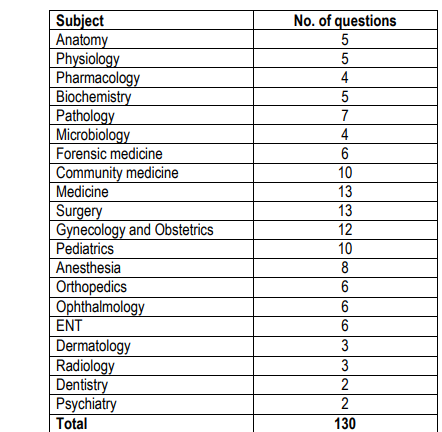
The exam covers an extensive range of topics, drawn from the entire MBBS syllabus. Below is a detailed breakdown of the subjects and their mark distribution:

  1. MCQs (1 mark each)
    • Anatomy: 5 questions
    • Physiology: 5 questions
    • Pharmacology: 4 questions
    • Biochemistry: 5 questions
    • Microbiology: 4 questions
    • Pathology: 7 questions
    • Orthopedics: 6 questions
    • Surgery: 13 questions
    • Medicine: 13 questions
    • Pediatrics: 10 questions
    • Obstetrics and Gynecology: 12 questions
    • Community Medicine: 10 questions
    • Anesthesia: 8 questions
    • Psychiatry: 2 questions
    • Forensic Medicine: 6 questions
    • ENT: 6 questions
    • Ophthalmology: 6 questions
    • Dermatology: 3 questions
    • Dentistry: 2 questions
    • Radiology: 3 questions
  2. CSQs (5 marks each)
    • Basic Science Subjects: 1 question
    • Orthopedics: 1 question
    • Surgery: 2 questions
    • Medicine: 2 questions
    • Pediatrics: 2 questions
    • Obstetrics and Gynecology: 2 questions

In total, the NMCLE consists of 130 MCQs and 10 CSQs, each testing different aspects of medical knowledge and clinical reasoning.

Preparation Tips: How to Study for the NMCLE

To successfully pass the NMCLE, you must adopt a strategic approach to your preparation. The NMCLE is designed to test the entire MBBS syllabus, so comprehensive study across a wide range of subjects is essential. Here are some key tips to help you prepare:

1. Start Early and Stay Consistent

Starting your preparation early gives you ample time to cover all subjects without feeling rushed. Aim to begin your preparation as soon as your internship begins. During your internship, you’ll already be exposed to clinical situations, which will help reinforce your theoretical knowledge. Try to allocate specific time slots for revision, even if it’s just 30 minutes a day.

2. Familiarize Yourself with the Exam Format

Understanding the NMCLE format is crucial. Practice with sample papers or mock exams to get a feel for the computerized test environment. Familiarize yourself with the MCQ and CSQ formats so that you’re comfortable switching between them during the actual exam.

Several books have been designed specifically for the NMCLE, which can serve as essential study aids. These include:

  • “NMCLE in a Nutshell”: This comprehensive guide provides a concise overview of the key topics you need to know for the exam.
  • “First Aid Step 1”: A must-have for any medical student, this book covers fundamental concepts across various subjects.
  • “Sharad Chandra Quick Review of PGMEE”: This book is especially helpful for students preparing for multiple medical exams, including the NMCLE.

In addition to these resources, online platforms like StatPearls and Edusanjal offer updated study materials, practice questions, and tips specific to the NMCLE.

4. Revise Key Topics from Each Subject

The NMCLE tests your knowledge across a wide variety of medical subjects, and each subject requires focused attention. Pay extra attention to the following areas:

  • Basic Science Subjects: Anatomy, Physiology, Pharmacology, Biochemistry, and Microbiology. These subjects are foundational and often have questions that test your theoretical knowledge.
  • Clinical Subjects: Surgery, Medicine, Pediatrics, Obstetrics, and Gynecology. These are heavily weighted in the exam, and understanding practical applications is crucial.
  • Specialized Subjects: Topics such as Orthopedics, Psychiatry, and Anesthesia require a practical understanding of clinical management.

5. Practice MCQs and CSQs Regularly

Practicing with MCQs and CSQs will help you refine your answering techniques. Focus on the types of questions that you struggle with and revise them regularly. Many online platforms and study groups offer practice tests that simulate the actual exam.

6. Stay Healthy and Manage Stress

Mental and physical well-being are essential during your preparation phase. Ensure you’re getting enough rest, eating well, and engaging in physical activities to keep your energy levels high. Managing stress is equally important—practice mindfulness, and take short breaks when needed. Balancing study and relaxation will help you stay focused and calm during the exam.

Time Management During the Exam

One of the most crucial aspects of any exam is managing your time effectively. With a 3-hour duration for 180 questions, you need to pace yourself to avoid rushing at the end. Here’s a simple time-management strategy:

  • MCQs: Allocate about 90 minutes for the 130 MCQs. Aim to answer the easier questions quickly and revisit the harder ones later.
  • CSQs: Spend about 30 minutes on the 10 CSQs, ensuring that you carefully read each clinical scenario before selecting your answer.

Keep track of the time as you progress, and don’t spend too long on any single question. The computerized format allows you to change answers, so mark questions that you’re unsure of and return to them at the end.

What to Do If You Fail the NMCLE

Although passing the NMCLE is the goal, it’s important to accept that failure is sometimes part of the journey. If you do not pass, take time to evaluate your preparation strategy. Reflect on the areas where you were weak, and make a detailed plan to address these gaps before reattempting the exam. Remember, persistence is key.

Final Thoughts: Stay Positive and Focused

The NMCLE is undoubtedly a challenging examination, but with a structured study plan, consistent effort, and a positive mindset, you can successfully pass the exam. Whether you are preparing for your first attempt or retaking the exam, maintaining a calm and determined attitude will make all the difference. Prepare early, stay disciplined, and trust your preparation.

Good luck with your NMCLE preparation journey! With dedication and hard work, success will surely follow.